

African Venture Is Growing Up. But the Rules Just Changed.
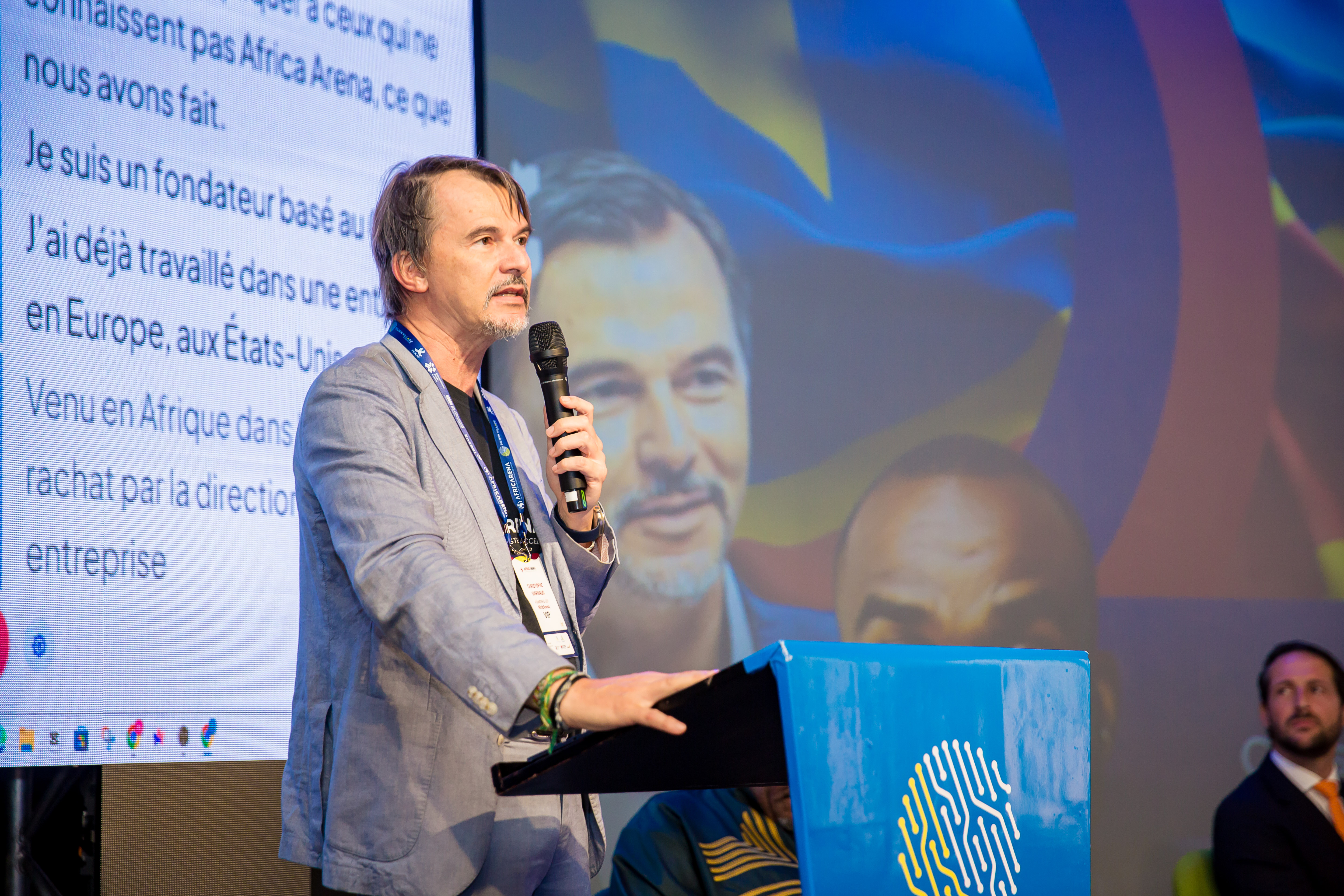

By Christophe Viarnaud, Founder & CEO, Methys Venture Studio
I read Ido Sum’s recent piece, Adolescence: A Different Take on African VC Maturing, with a mix of recognition and discomfort.
Recognition, because his diagnosis lands.
Discomfort, because I’m not sure we’re asking the right question.
Ido makes a compelling case that African venture has reached adolescence: companies were capitalised on the assumption of future exits that, in many cases, haven’t materialised. The top of the ecosystem has outpaced the bottom. Early-stage funding has dropped sharply from its 2022 peak, while select companies have raised sums that dwarf realistic exit valuations.
His description of the “wall” between entry valuations and ultimate exit realities is particularly powerful.
There’s plenty to debate there.
But I think we’re overlooking a massive variable: AI. We are attempting to solve the structural problems of African venture using an architecture designed largely for a pre-AI world. And that matters.
The venture model was built on scarcity
For most of my career in African tech, the fundamental equation was straightforward: building a technology company required scale in human capital.
You needed engineers, product managers, sales teams, customer support, physical infrastructure and, above all, time.
Capital was the fuel that allowed you to assemble all of that and keep going long enough to scale.
That dynamic dictated the standard venture playbook: Seed → Series A → Series B → Series C → Exit...
Because startups needed progressively larger injections of cash, we built an entire support apparatus around providing it: funds, LPs, accelerators, venture studios, DFIs, pitch competitions, fundraising platforms and a shared lexicon around funding rounds.
I’ve spent the last two decades helping construct parts of that machinery in Africa — through AfricArena’s investor platform, Digital Collective Africa, and venture building at Methys (which started 16 years ago).
I’m not throwing stones from the outside. I helped build this machine.
But the assumptions behind it are changing.
AI rewrites the capital equation
The real shift with AI isn’t just the emergence of new AI-native startups. It is the radical transformation of how companies can be built.
Lean teams can now execute work that previously required dozens of people. Code generation, prototyping, market analysis, customer support, sales pipelines and back-office operations are being automated or massively augmented.
This doesn’t apply universally. Hard tech, fintechs managing balance sheets, climate infrastructure and logistics still demand significant physical capital.
But across a large part of the digital economy, the relationship between people, time and capital is changing dramatically.
If a team can go from concept to product, customers and revenue on a fraction of the historical cost, the traditional sequence of increasingly large funding rounds is no longer the only path to scale. This is currently what we are experiencing first hand at Methys Venture Studio both with our portfolio companies and with building new ventures.
And that changes the conversation around the first cheque, the Series A, the venture studio and, ultimately, the exit.
Are we solving for a pre-AI world?
Most observers, including my friend Ido, today agree that Africa imported a mature capital structure before establishing the exit infrastructure to support it. That is a real challenge.
But there is a second, deeper issue: we are working to perfect that inherited capital structure just as the economics of company creation are being rewritten globally.
Why spend the next decade trying to turn African venture into Silicon Valley circa 2015? We should be asking what an African venture economy built for 2035 looks like.
Rethinking the “First Cheque” and “Missing middle
We frequently lament the lack of early stage funding, and the $1m-3m funding gap for growth-stage startups in Africa. But the “missing middle” isn’t just a capital supply issue.
It is at least three things:
1. Capital: A shortage of appropriately structured growth capital.
2. Company Building: Companies that may not yet have the operational maturity to absorb $1-5m effectively.
3. Market Infrastructure: Fragmentation, regulatory hurdles, FX risk and the practical difficulty of scaling across African markets.
When you factor in AI, solving the early stage build or the missing middle doesn’t automatically mean pumping in more equity.
It means asking whether the company sitting in that middle will even look like the company we are used to financing.
This is where the venture studio model can play a key role. Studios allow founders to share underlying technology, operational talent and distribution networks rather than building everything from scratch. Combined with AI, they can run more experiments, validate ideas faster and kill failed concepts earlier.
That doesn’t make venture studios the answer. But it does challenge some of our assumptions about how companies need to be built, and therefore how they need to be financed.
VC isn’t the whole capital stack
Historically, African venture capital has often been asked to fund businesses with significant balance-sheet requirements: loan books, working capital, inventory and vehicle fleets.
That isn’t necessarily a VC problem. It is a capital architecture problem.
We need better matching between the instrument and the economics of the business:
Equity for technology, IP and growth.
Debt and receivables financing for working capital and inventory where appropriate.
Revenue-based financing for predictable cash flows.
Blended capital where there are genuine structural market gaps.
Strategic capital where market access and corporate relationships matter.
The future African tech landscape needs a more diverse capital mix, not simply bigger VC funds.
Expanding the exit shelf
Everyone agrees Africa needs liquidity and stronger exit pathways. But designing companies strictly around today’s limited exit opportunities risks creating a self-fulfilling ceiling.
Instead, we should also be asking how to expand the buyer pool. Mobilising domestic institutional capital. Developing regional corporate acquirers. Driving more cross-border M&A. Building stronger secondary markets. And attracting international strategic buyers from the Gulf, Asia and beyond.
The question isn’t only: How do we build companies that fit today’s exits?
It is also: What do we need to build so that tomorrow’s exit market is bigger than today’s?
This is what are trying to address by launching the AfricArena Scale Roadshow circuit that from this coming Africa Investor Week will aim at expanding the buyer’s universe, and work at it relentlessly every quarter.
The leapfrog opportunity
Africa is routinely told it is lagging behind and must catch up to Silicon Valley, London or Bangalore
But when the underlying technology stack changes, being less encumbered by legacy systems can become an advantage. We don’t need to rebuild every layer of the old playbook. We can take what works, discard what doesn’t, and build around the economics that are emerging now. This isn’t just about VC funds.
It’s about an integrated venture economy, the interaction between founders, capital, company builders, corporates, institutions, technology and market access. Africa is the continent of leapfrog innovation. It must now do so with its Venture economy.
Designing what comes next
Adolescence is the phase where you start questioning what you inherited and figuring out what actually fits. I like Ido’s metaphor.
But Africa isn’t growing up in the same world that created the traditional VC playbook. AI has shifted the baseline.
And that is why I think we need to be careful about spending the next decade simply fixing the model we inherited.
The more interesting question is: What should the African venture economy look like when building a technology company requires fundamentally less capital, smaller teams and radically less time?
That is the premise behind AfricArena’s 2026 Venture Unconference: Building a New Venture Economy in the Age of AI
We’ll still debate first cheques, missing middles, capital stacks, venture studios and exits. But perhaps we should have those conversations with one additional question in the room:
Are we fixing the venture economy we inherited, or designing the one we actually need?


Comments